
A custom ecommerce store that took nearly £300k in its first season, from zero






Background.
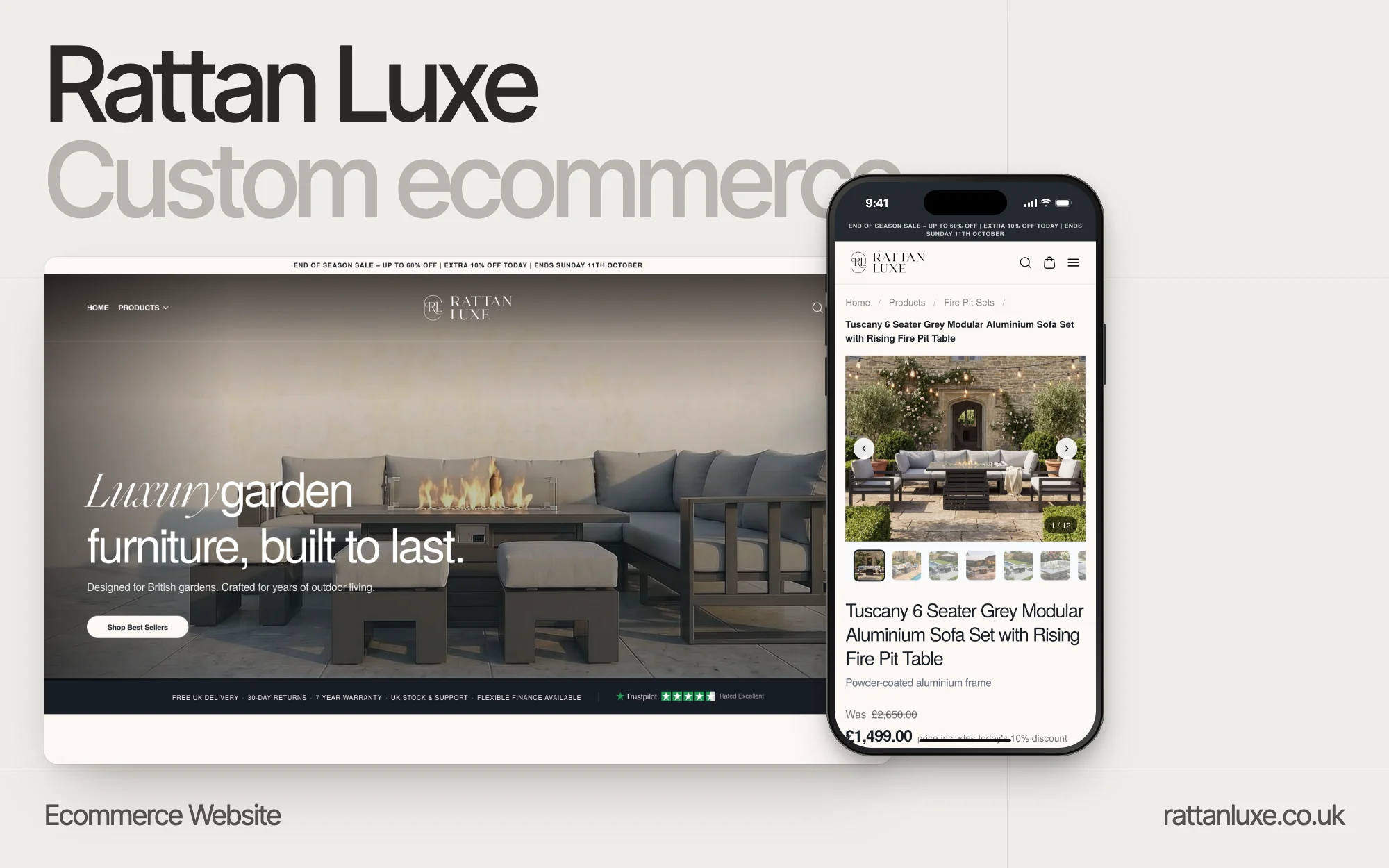
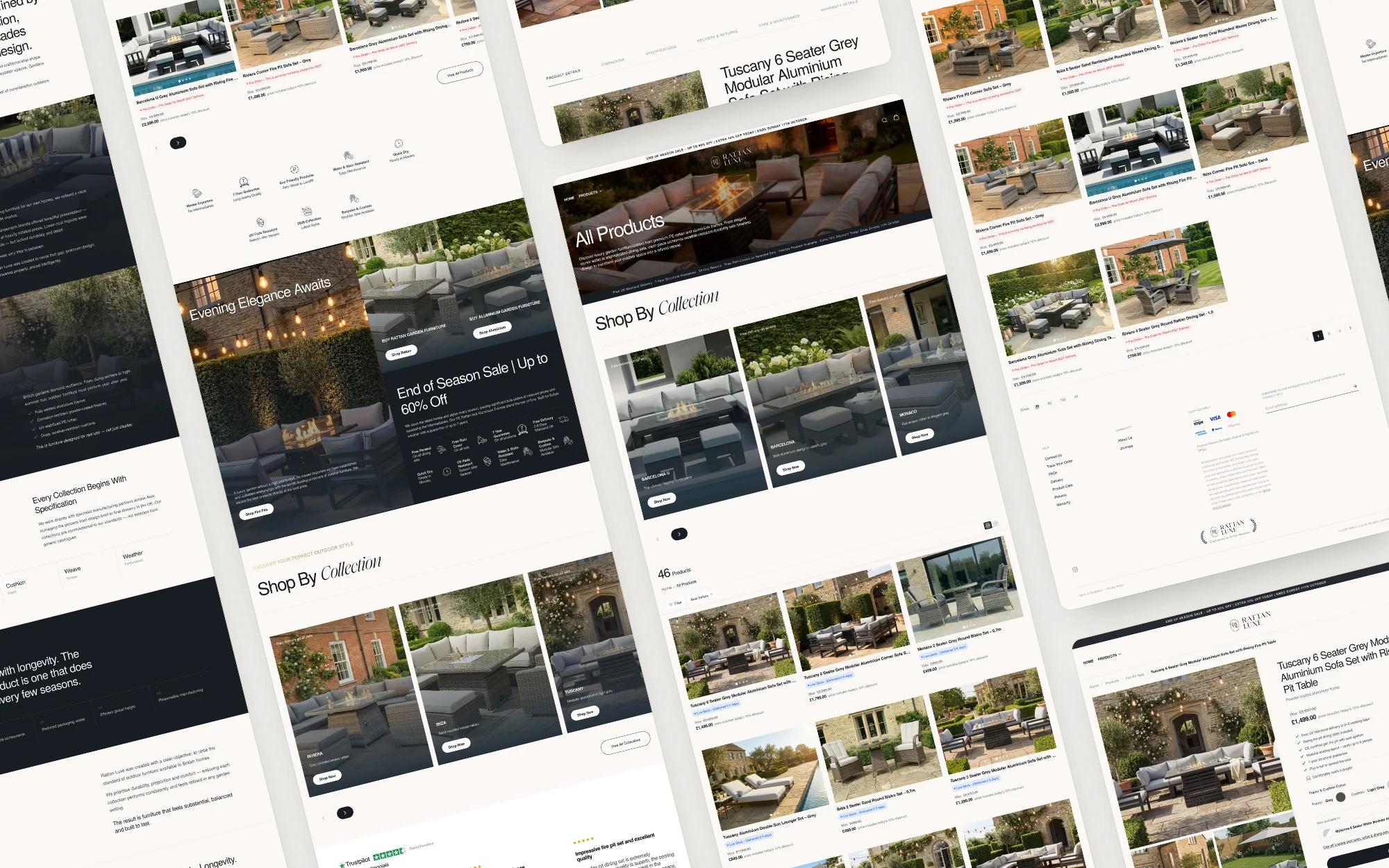
Rattan Luxe is a UK garden furniture brand selling rattan and aluminium sofa, dining and fire pit sets, most of them priced above £1,000. When Jon, the founder, first contacted me, the business was at the very beginning. The first stock was on order from the manufacturer, the brand had no website and almost no reviews, and the plan was to sell almost entirely through Google Ads from spring 2026.
That set a clear brief. Every visitor would be a paid click, most of them on a phone, and few would have heard of the brand before. The website would need to establish credibility quickly and make a large purchase feel safe.
The constraints we worked within.
- Around 80% of visitors were expected to browse on mobile.
- Visitors give a page roughly three seconds before deciding whether to stay.
- Garden furniture is rarely a repeat purchase, so most customers would buy once, often during their first visit.
- Many competing stores ran on slow, template-based platforms. Jon had already ruled out WooCommerce because of its load times.
Jon's commercial strategy was to combine a premium presentation with competitive, promotion-led pricing. For that to work, the site had to look as credible as the most established brands in the category, while staying fast and simple enough never to interrupt a purchase. This case study looks at how we approached that as a custom web design and development project, and at what happened in its first six months.
What the research told us
Before designing anything, we looked at what is known about how people judge an unfamiliar online store. Three findings shaped the brief.
First impressions form almost instantly. A study by Lindgaard and colleagues found that people form a judgement about a web page's visual appeal within about 50 milliseconds. In Stanford's Web Credibility Research, 46.1% of participants' comments about a site's credibility referred to its visual design, more than any other factor. For a new brand with few reviews, the design itself would need to carry much of the trust.
Speed affects whether visitors stay. Google's research on mobile pages found that 53% of visits are abandoned when a page takes longer than three seconds to load, and that the probability of a bounce rises by 32% as load time goes from one second to three. With every visitor arriving from a paid ad, slow pages would reduce the return on that spend directly.
Trust matters most at checkout. Baymard Institute's checkout research found that 19% of shoppers had abandoned a checkout because they didn't trust the site with their card details. On orders worth over £1,000, offering payment methods customers already know, such as Apple Pay, PayPal and Klarna, was a practical way to reduce that hesitation.
Sources: Lindgaard et al., Behaviour & Information Technology, 2006; Stanford Web Credibility Research, 2002; Think with Google, mobile page speed benchmarks; Baymard Institute, checkout usability.
Designing for paid, mobile traffic
Because nearly every visitor arrived from Google Shopping or Search, we treated page speed and the mobile buying journey as the first priorities.
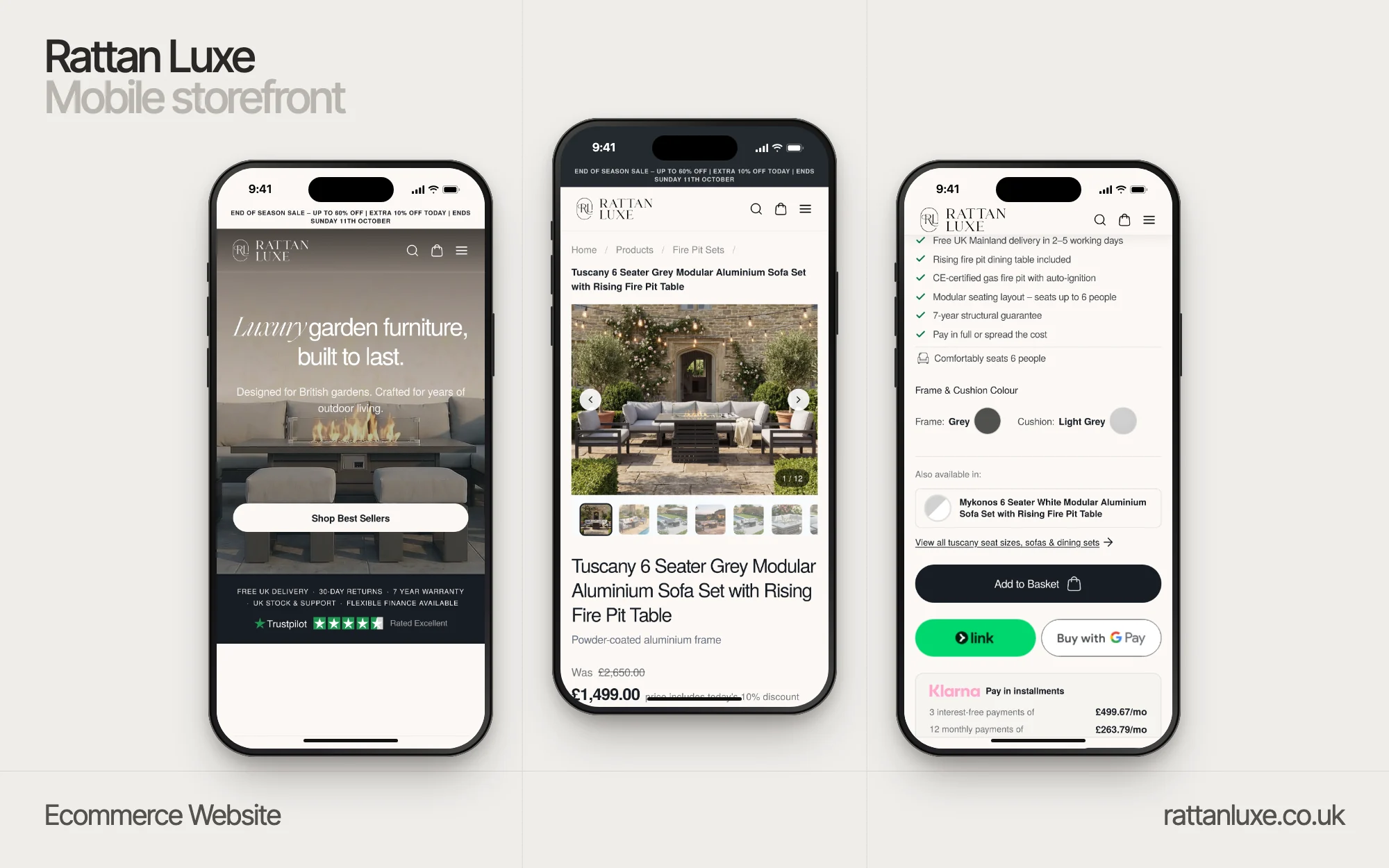
Product pages. We placed the information a buyer checks first near the top of each product page: price, finance options, delivery time and the seven-year warranty. Specifications, dimensions and care guidance follow further down for those who want more detail.
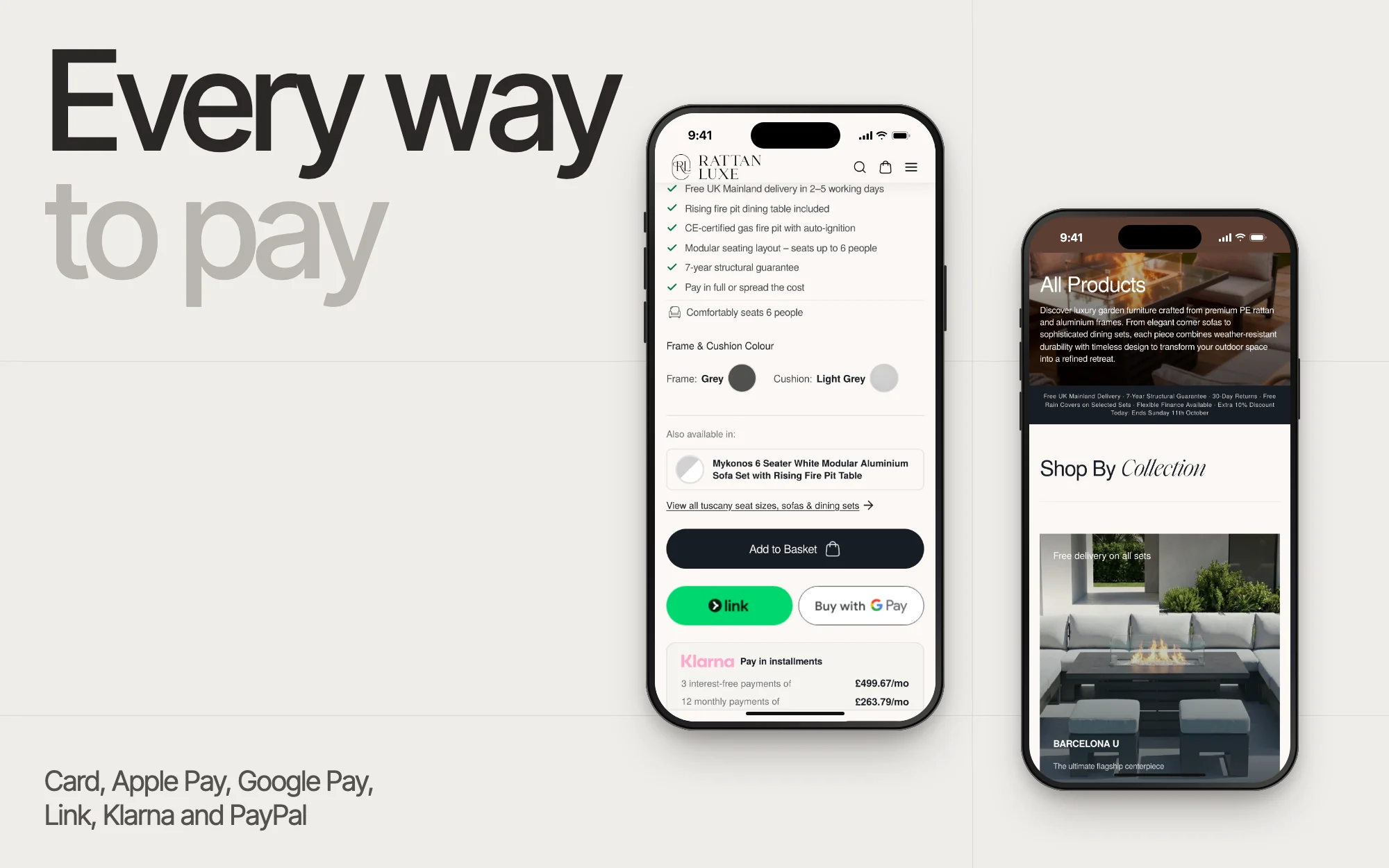
Checkout. The checkout accepts card, Apple Pay, Google Pay, Link, PayPal, bank transfer and Klarna. Klarna is particularly relevant at this price point, as it allows customers to spread the cost of a £1,499 set over monthly payments.
The storefront, checkout and admin were built as a single custom codebase rather than a template extended with plugins. This keeps pages fast as the catalogue grows, and it means any part of the buying journey can be adjusted without platform limits. Building all three as one full-stack web development project made that practical. Our guide to custom websites and templates covers the trade-offs in more detail.
Giving the team control of promotions
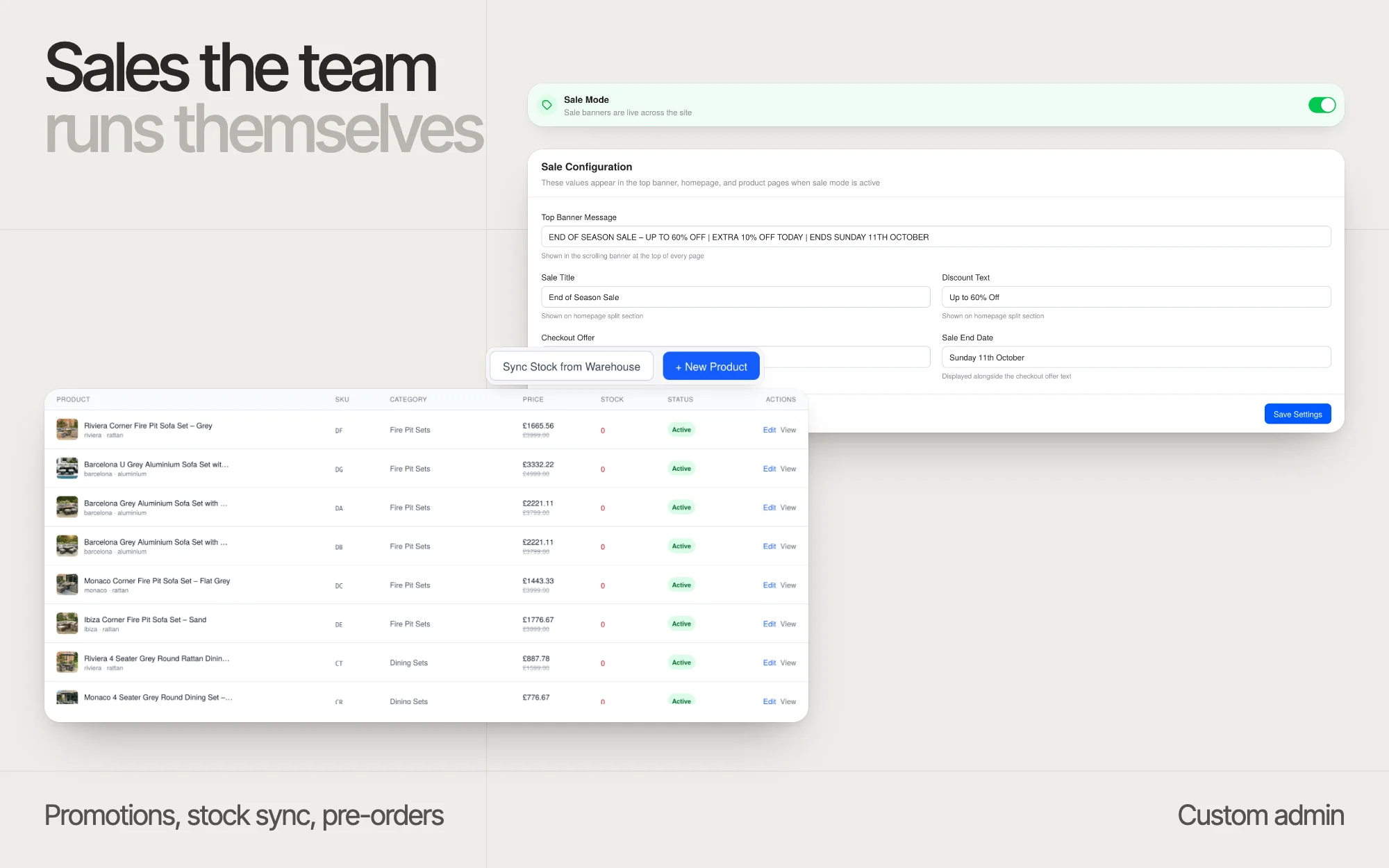
Rattan Luxe runs regular promotions, such as an end-of-season sale with an additional 10% off at checkout. Because these change often, we built them into the admin rather than into the code.
A promotions panel lets the team switch sale mode on and edit the banner, sale title, discount and end date. Saving the settings updates the top banner, homepage, product pages and checkout at the same time.
Orders, stock and pre-orders
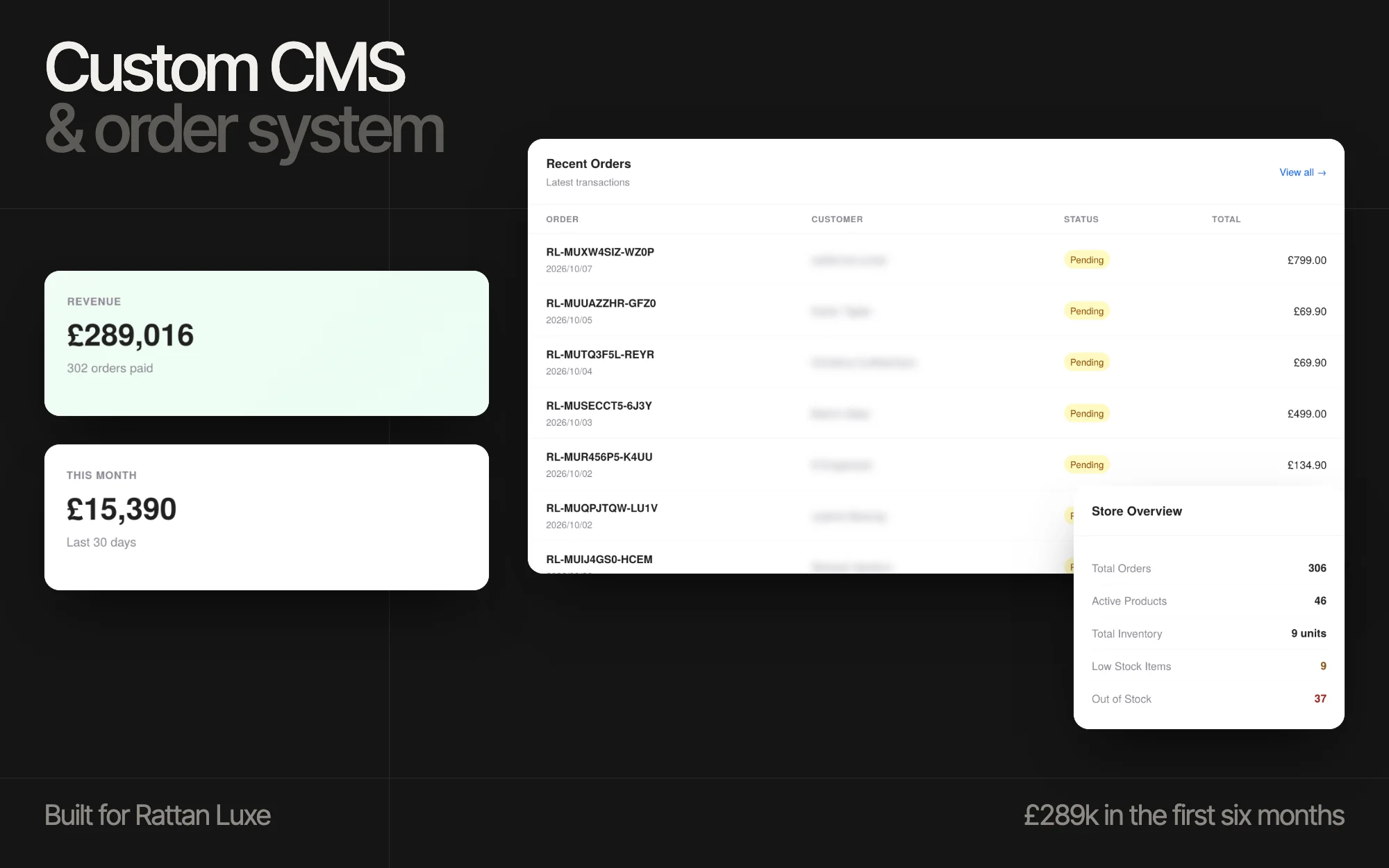
Behind the storefront is a custom admin designed around how Rattan Luxe operates. Revenue, the order pipeline and stock levels are visible on a single dashboard.
Warehouse integration. Stock is held by a third-party logistics warehouse. Paid orders are sent to the warehouse automatically and stock levels sync back into the admin, so orders never need to be entered twice.
Pre-orders. Furniture ships from overseas months in advance. Products can be set to accept pre-orders with an expected delivery date and a 10% deposit, so customers can reserve pieces from the next shipment. Around 30 pre-orders are already booked for next season.
Visibility in search and AI assistants
The store generates its Google Merchant feed automatically for Shopping campaigns, with Google Ads conversion tracking and GA4 in place from launch. Klaviyo handles email sign-ups and marketing.
Since launch, Jon has seen ChatGPT recommending Rattan Luxe to shoppers, with those visits showing in Google Analytics. We attribute this to clearly structured, descriptive product content, the same foundations we apply to on-page SEO. It is an early signal, and one we will be tracking in the second phase of the project.
How the first season went
Rattan Luxe averaged a 10× return on ad spend across its first six months and converted 1.5% of visitors, around twice the UK furniture median. The table below compares these results with published industry benchmarks.
Sources: Visionary Marketing, ROAS benchmarks UK 2026; Foundry CRO, Google Shopping benchmarks by category 2026; GoGoChimp, UK conversion rate benchmarks 2026.
At the UK median conversion rate, the same traffic would have taken about £135k.
Conversion rate is the part of these results the website affects most directly. With the same traffic, products and average order value, a 0.7% conversion rate would have brought in roughly £135k rather than £289k. On that basis, the site covered its own cost within its first three orders.
This is an estimate. It assumes the same traffic and average order value.
“It’s very quick. It’s very fast. I think it’s the best out there.”
“I was worried whether it would be able to handle the volume, the orders, linking in Stripe and payments. It’s very robust. It’s functioned really well.”
Jon, founder of Rattan Luxe
Jon also shared that his suppliers, who see many retailers' websites, described the store as top end. After the first season, he asked us to start on version two, building on the existing site rather than replacing it.
Revenue and order figures are paid orders taken through the site since launch, from the store’s own admin. £289k is the cash received so far. Pre-orders are paid with a 10% deposit, so the average order counts each pre-order at its full price, which brings total order value to about £387k. Return on ad spend and conversion rate come from Rattan Luxe’s ad account. Advertising, the product range and pricing all contributed to these results. This case study focuses on the website’s part: turning visits into orders.
We’d be glad to talk it through with you.
- Understand how your customers buy. We look at the questions buyers ask before they commit, and where they tend to hesitate.
- Design the store in Figma. You review and refine the design with us before any code is written.
- Build the full system. Storefront, checkout, payments, admin, warehouse and feeds, in one codebase you own.
- Launch and keep improving. Conversion tracking is set up from day one, so changes are guided by real data.
Transform your website into a revenue-generating asset
Partner with an award-winning web designer and web developer from the Philippines, delivering world-class websites to global brands. 15+ years of experience creating sites that convert visitors into customers.
Frequently Asked Questions
-
For high-ticket products bought on paid traffic, often yes. A £1,000 garden furniture set is a considered purchase, so the buying journey has to answer delivery, warranty, finance and returns before the customer asks. A theme limits you to the platform’s page layouts, while a custom build can follow how your buyers actually decide, and it stays fast because features aren’t added through plugins. Rattan Luxe converted at 1.5%, about twice the UK furniture median.
-
As fast as you can make it, especially on mobile. Every ad click lands on your site, so a slow product page burns budget before the visitor sees the price. Google’s research shows bounce probability rises 32% as load time goes from one to three seconds. Rattan Luxe’s audience is around 80% mobile, so the store was built mobile-first with server-side rendering and image optimisation from day one.
-
Yes. Rattan Luxe’s stock lives with a third-party warehouse. Paid orders push to the warehouse automatically, and stock levels sync back into the admin with one click, so the team never re-keys an order or sells something that isn’t there. Any 3PL with an API can be connected the same way.
-
Yes. The admin has a promotions panel where the team switches sale mode on, edits the banner, the sale title, the discount text and the end date, and the whole site updates. They run their own seasonal sales without touching code or waiting on anyone.
-
Rattan Luxe took about 12 weeks from kickoff to launch, timed to go live before the spring selling season. Smaller stores can be quicker. The timeline depends on the catalogue, the integrations (payments, warehouse, email, feeds) and how much content is ready.
-
Custom ecommerce sits in my Bespoke Max package, from $8,000. That covers bespoke design, the full store and checkout, a custom CMS, and integrations like Stripe, Klaviyo and Google Shopping. Warehouse integrations and larger catalogues are scoped on a call. For context, Rattan Luxe’s site paid for itself within its first three orders.