
E-commerce / Luxury Outdoor Furniture
Building a Luxury Garden Furniture Store From the Database Up
How a fully custom SvelteKit e-commerce build replaced an off-the-shelf platform with a faster, fully owned storefront and back office
- Client
- Rattan Luxe (UK)
- Timeline
- 12 weeks
- Role
- Designer & Full-Stack Developer
- Industry
- E-commerce / Luxury Outdoor Furniture
Overview
Rattan Luxe sells premium garden furniture to UK buyers spending £1,000 to £4,000 on a single set. At that price point, the website isn't a brochure. It's the showroom, the salesperson, and the checkout counter all at once. Anything that feels cheap or clunky costs a sale measured in thousands.
This was a complete custom build, not a theme. Storefront, checkout, payments, order management, warehouse sync, email, and a bespoke CMS — designed in Figma and developed end-to-end on SvelteKit. The brief was simple to say and demanding to deliver: make a high-ticket furniture purchase feel as considered and trustworthy online as it would in a flagship store, and give the business a back office they fully own.
The result is a storefront that loads instantly, a checkout that accepts however the customer wants to pay, and an admin where the team runs the entire operation — products, stock, orders, promotions, content, and media — without touching code or paying per-seat platform fees.
The Challenge
High-ticket furniture is a trust purchase. Buyers don't impulse-buy a £2,000 corner sofa. They research, compare, abandon, and come back. Every friction point in that journey — a slow product page, an unclear delivery promise, a checkout that only takes one payment method — is a reason to leave and not return.
Off-the-shelf platforms force a trade. You either accept the template's limits on how products, pricing, and the buying journey work, or you fight the platform with plugins that bloat load times and break on update. Neither protects a premium brand. And every month, the platform takes its cut and locks more of the business behind features you rent rather than own.
The operational side was just as demanding. Stock lives in a third-party warehouse (a 3PL). Orders need to flow out to that warehouse automatically, stock levels need to flow back in, and the team needs a single place to manage everything without spreadsheets or manual re-keying. That's not a storefront problem — it's a full-stack systems problem.
Key Pain Points
- High-ticket buyers research and compare heavily — friction kills conversions worth thousands
- Template platforms constrain the buying journey and dilute premium positioning
- Plugin-based stores get slower and more fragile with every feature added
- Recurring platform fees and per-seat pricing scale against the business as it grows
- Stock lives in a third-party warehouse and must stay in sync automatically
- The team needed one back office to run products, orders, stock, and content — no code, no spreadsheets
Industry Context
Furniture and homeware e-commerce runs on high order values and long consideration windows. The average online furniture conversion rate sits around 1%, well below retail as a whole, precisely because the purchase is large and deliberate. Winning isn't about volume of traffic — it's about not losing the few high-intent buyers who arrive ready to spend.
Speed is the silent conversion lever. Google's research shows that as page load time goes from one second to three, the probability of a bounce rises 32%, and 53% of mobile visits are abandoned if a page takes longer than three seconds. On a store where one sale is worth four figures, a slow product page is an expensive liability.
Payment choice matters more at high ticket prices. Offering Buy Now Pay Later options like Klarna can lift conversion and average order value because a £2,000 purchase becomes a manageable monthly figure. A checkout that only accepts a single card flow leaves money on the table at exactly the moment the buyer is ready to commit.
~1%
Avg. furniture e-commerce conversion
32%
Bounce rise from 1s→3s load time
53%
Mobile visits lost over 3s load
£1k–£4k
Typical order value
The Approach
The build started with the buying journey, not the homepage. I mapped the full path a high-ticket buyer takes — discover, compare, reassure, decide, pay — and designed each step to remove a specific doubt. The trust bar (free UK delivery, 7-year warranty, UK stock, flexible finance) isn't decoration; it answers the exact questions a £2,000 buyer asks before committing.
On the engineering side, the principle was ownership. Every part of the stack that a platform would normally rent back to the business — checkout, CMS, order management, customer data — was built and owned outright. SvelteKit server-side rendering keeps pages fast and SEO-friendly; PostgreSQL and Drizzle keep the data clean and queryable; the warehouse integration keeps stock honest without manual work.
Journey & Trust Mapping
Mapped the high-ticket buyer journey end to end and identified the specific reassurance each step needs — delivery, warranty, finance, returns — before designing a single screen.
Bespoke Storefront Design
Designed an editorial, restrained storefront in Figma that signals premium through space and typography, then translated it pixel-perfect to SvelteKit with purposeful motion.
Full-Stack Commerce Engine
Built products, variants, pricing, cart, and a multi-provider checkout (card, PayPal, Klarna) on SvelteKit, PostgreSQL, and Drizzle, with Stripe webhooks confirming every order server-side.
Back Office & Warehouse Sync
Built a custom CMS for products, orders, promotions, content, and media, wired to the 3PL warehouse so orders push out and stock syncs back automatically.
The Solution
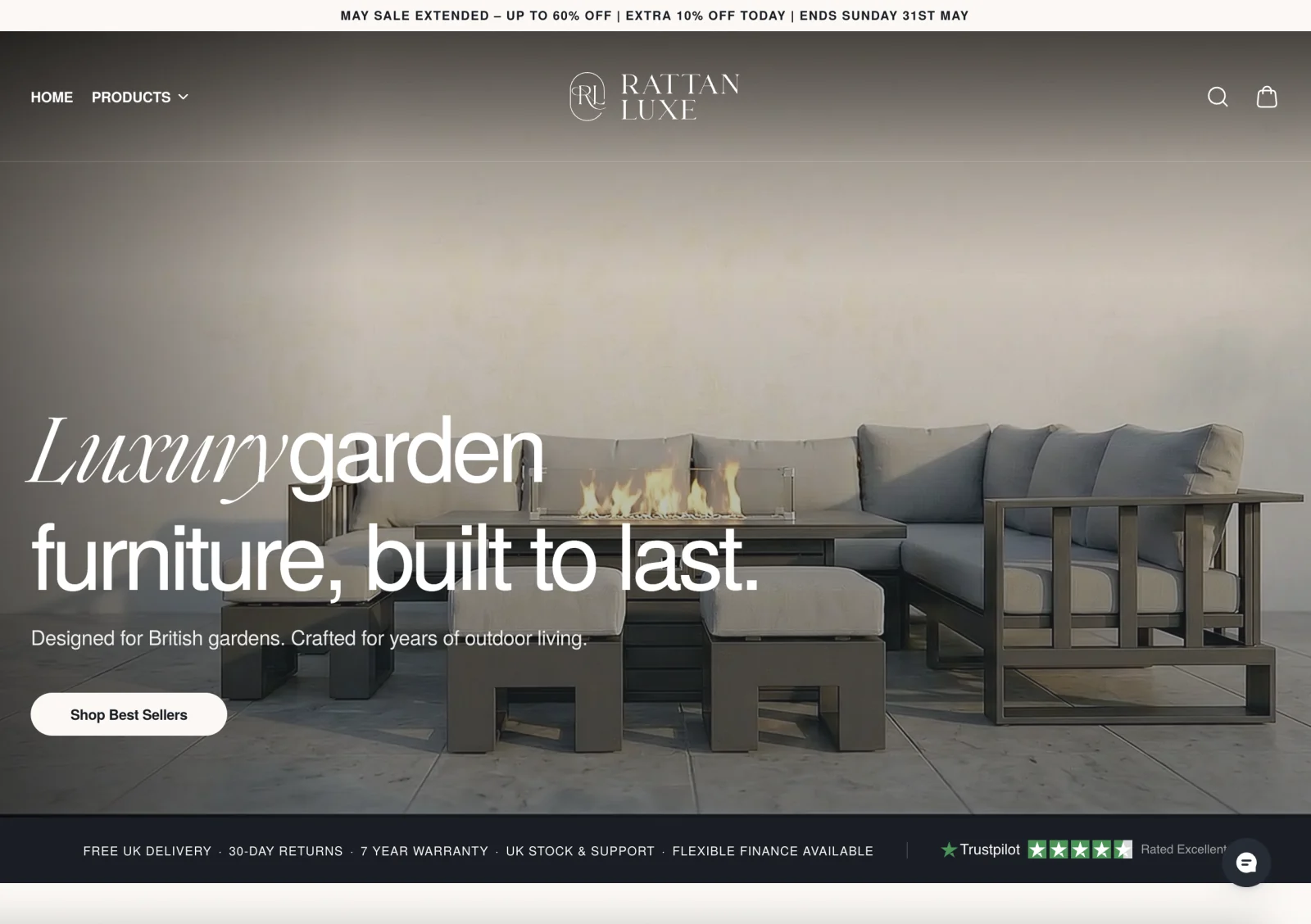
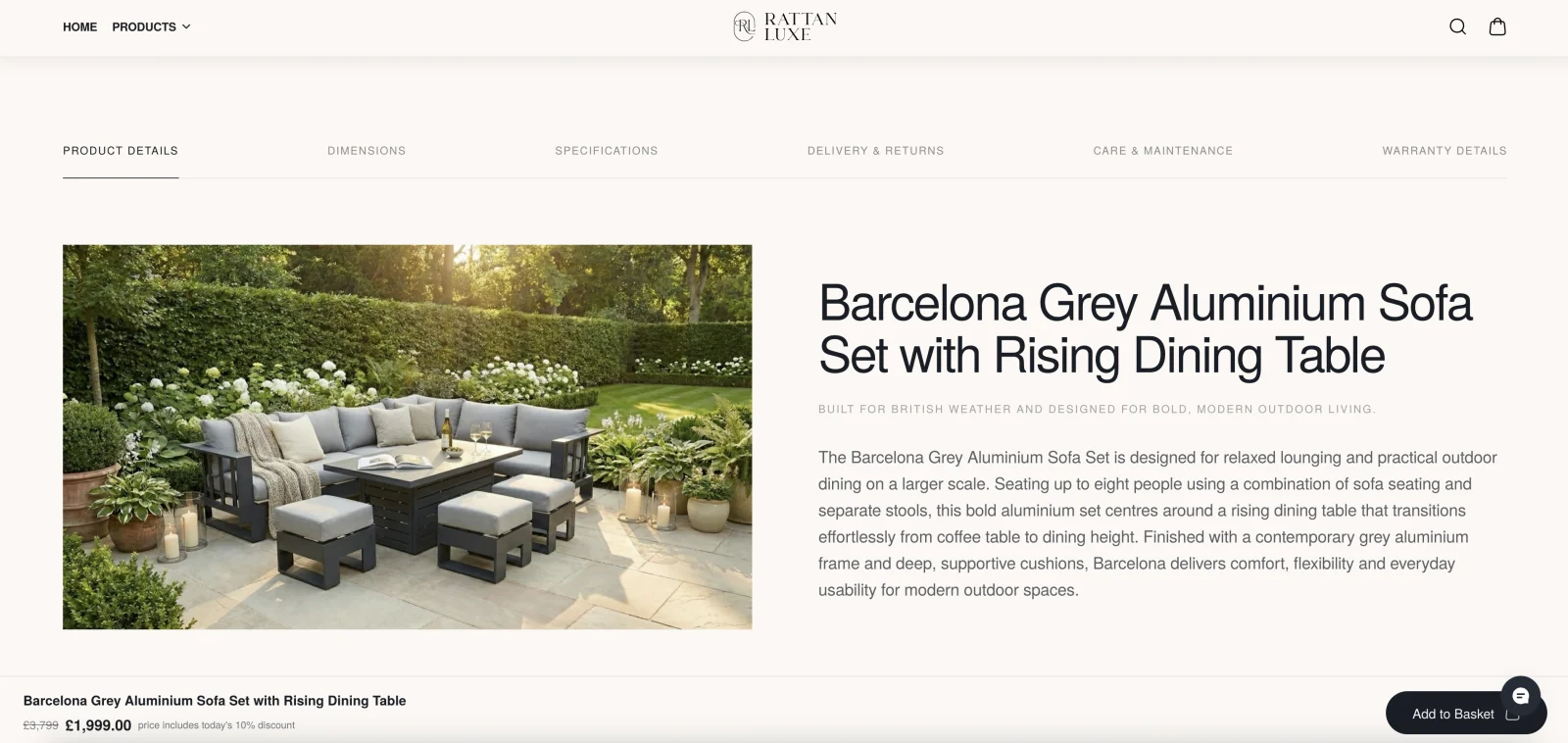
The storefront leads with full-bleed lifestyle imagery and a restrained serif-and-sans type system that makes the furniture, not the interface, the hero. Generous space and a calm palette do the premium signalling. A persistent trust bar carries the four things a high-ticket buyer needs to know — free UK delivery, 7-year warranty, UK stock and support, flexible finance — without shouting.
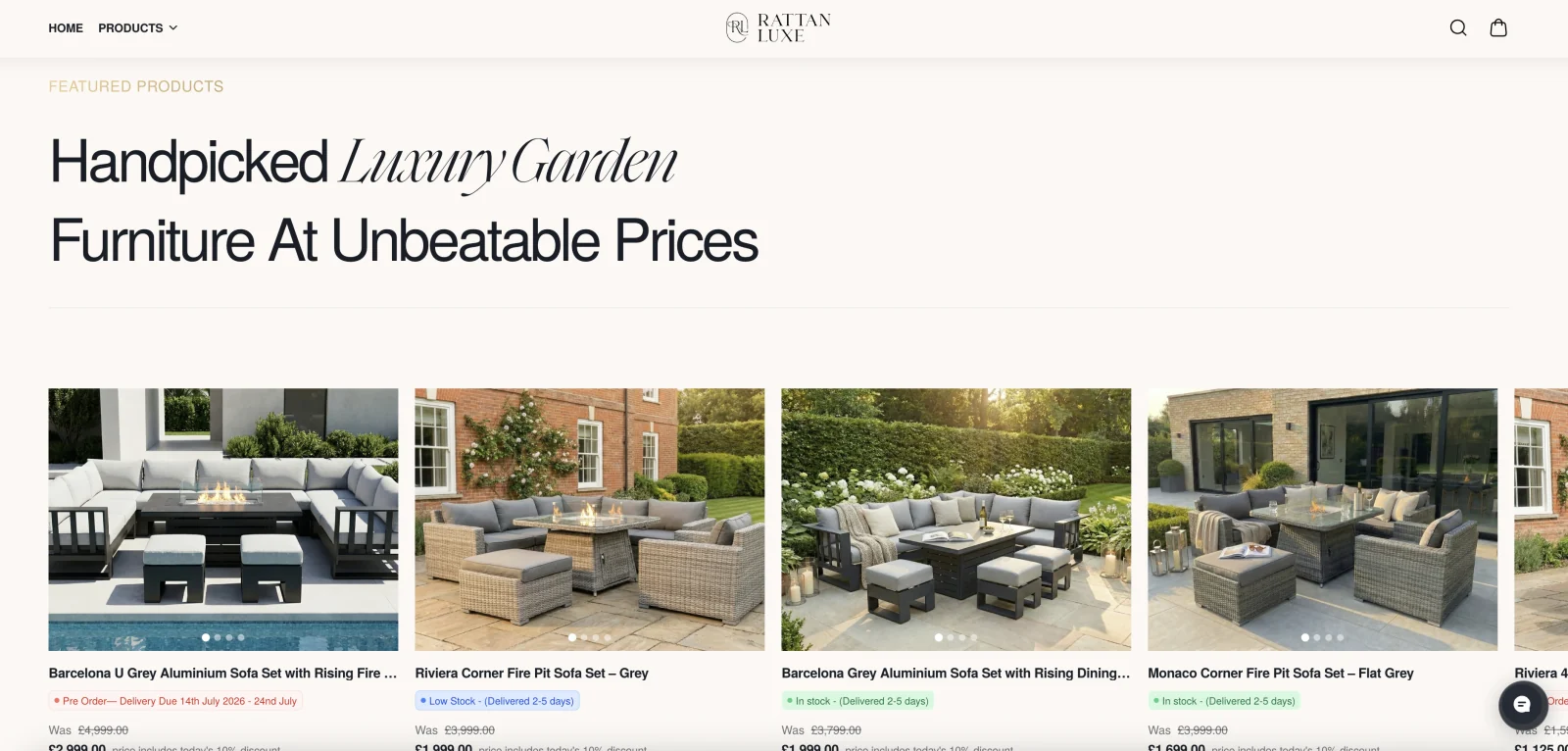
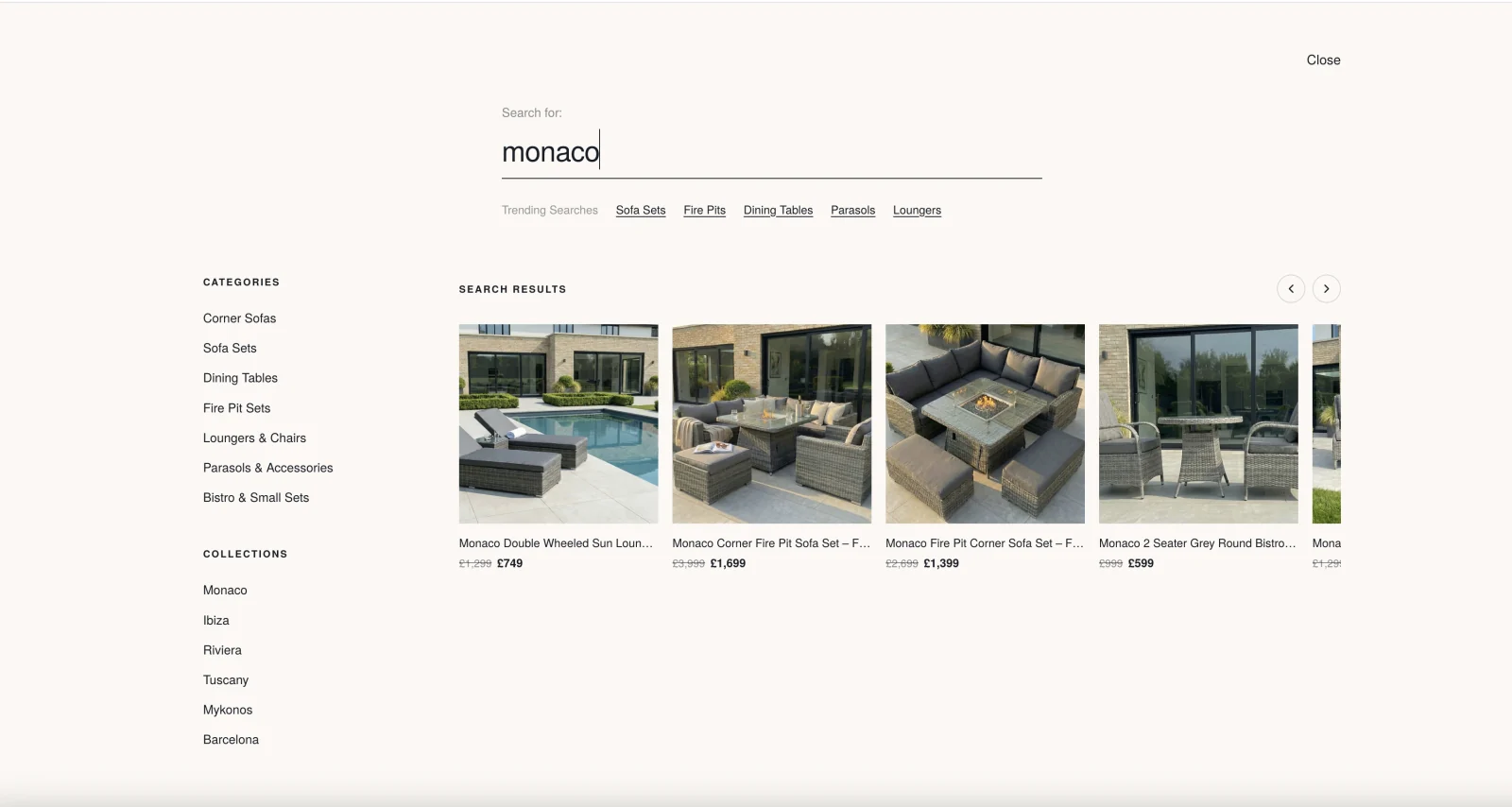
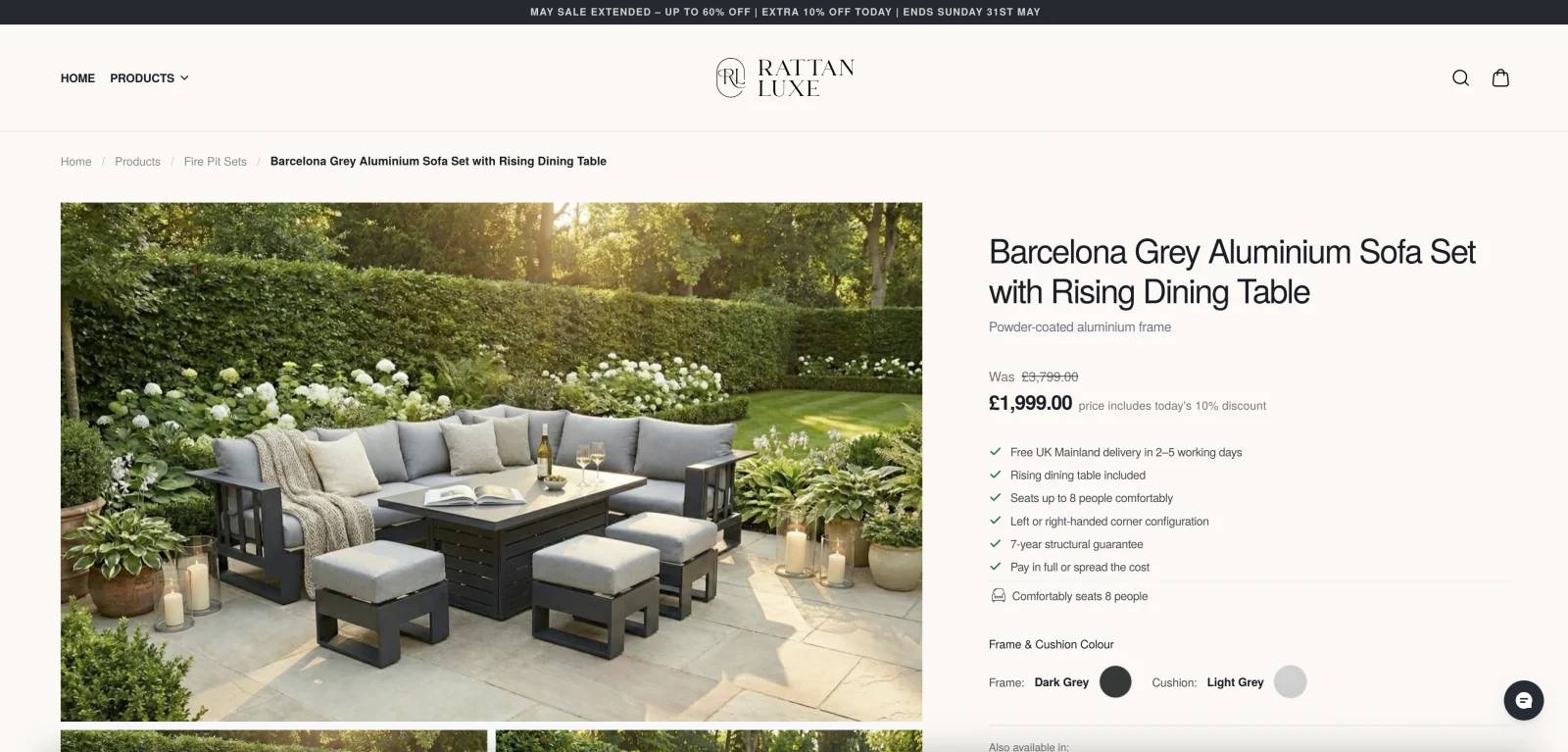
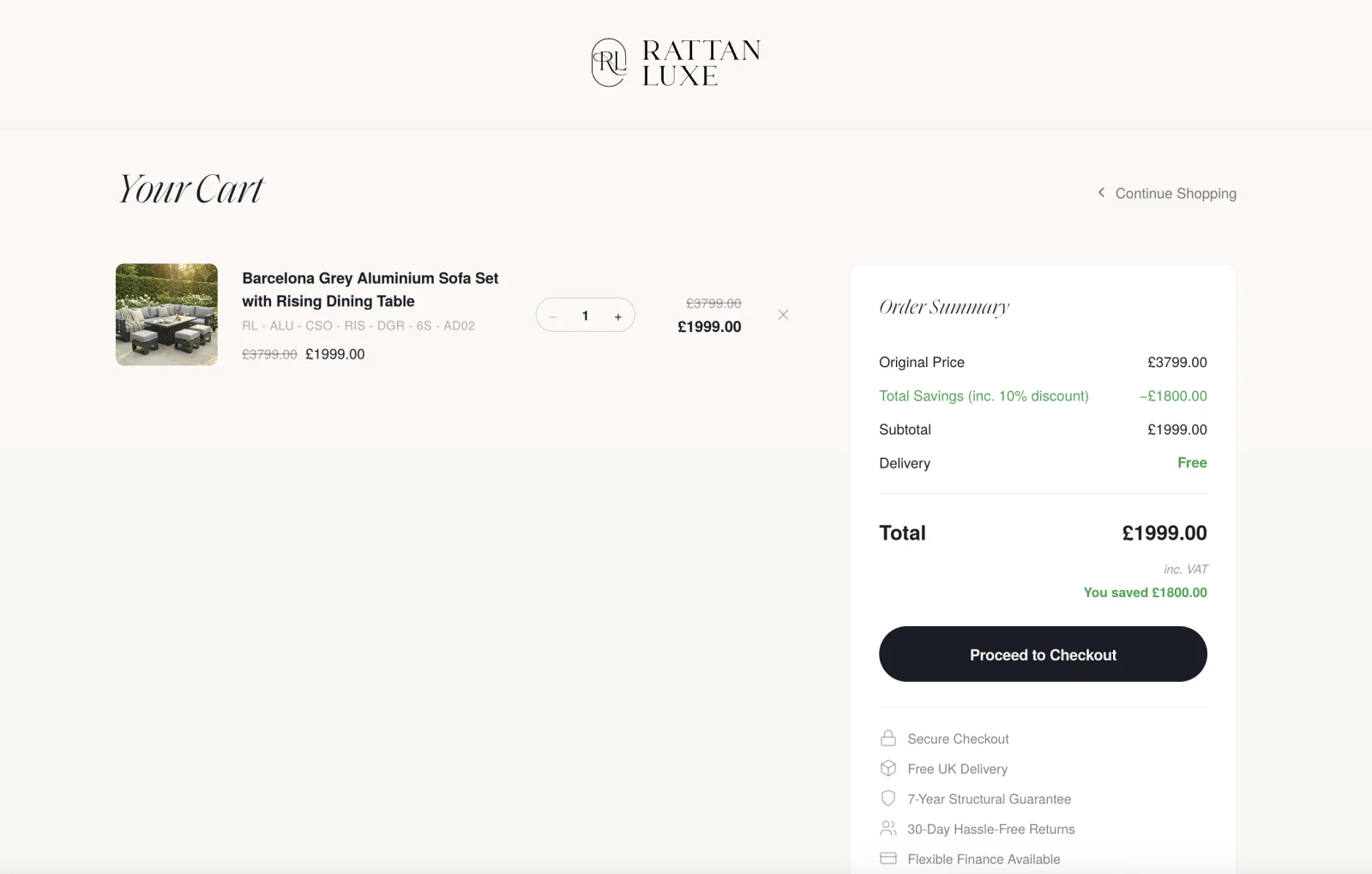
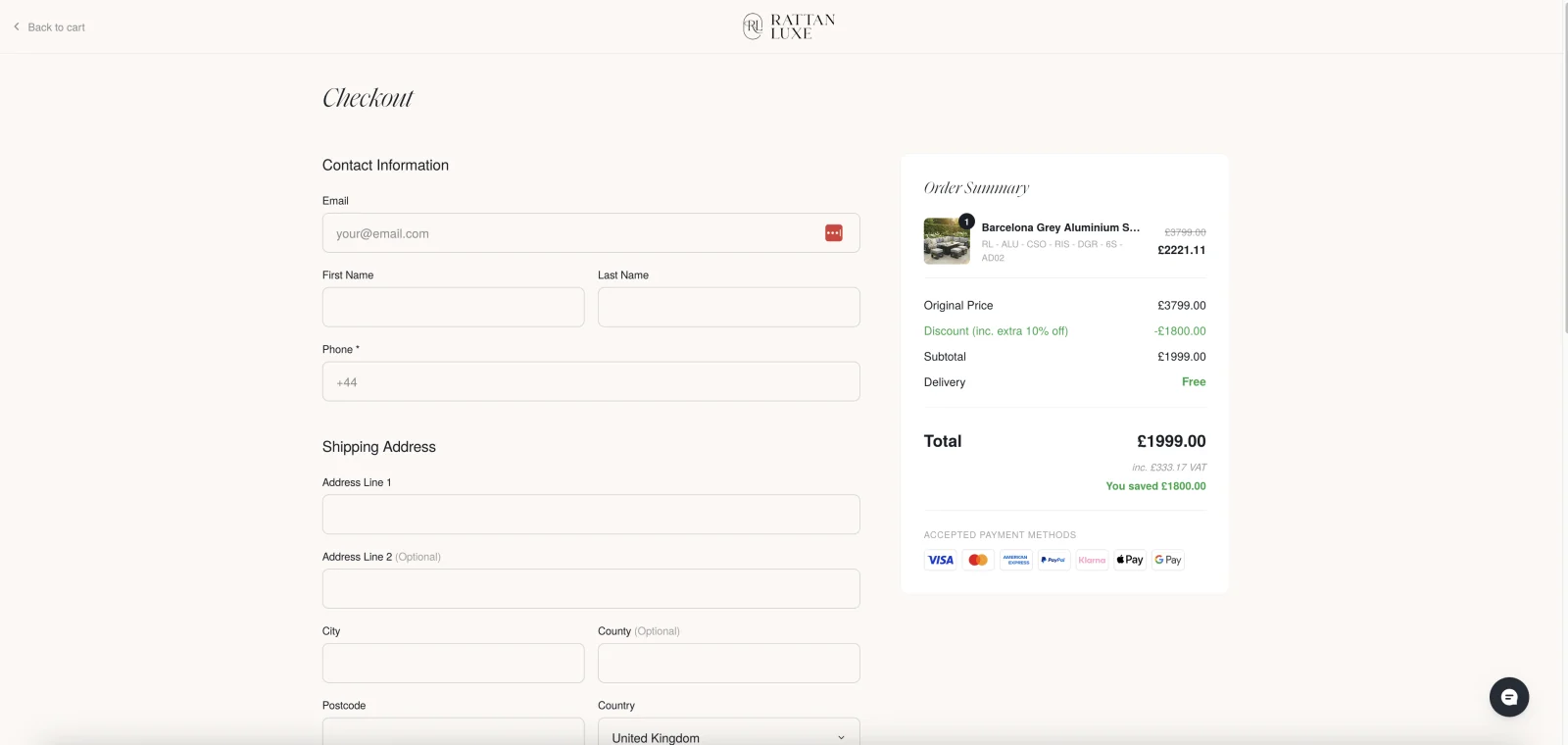
Product discovery is built for comparison, not just browsing. Predictive search surfaces collections and products as the buyer types; product pages layer the decision-critical details (price, finance, delivery window, warranty, seating configuration) above the fold and let specs, dimensions, and care unfold below. The cart and checkout make the high price feel safe: clear savings, free delivery, secure-checkout reassurance, and a multi-payment step that accepts Visa, Mastercard, Amex, PayPal, Apple Pay, Google Pay, and Klarna.
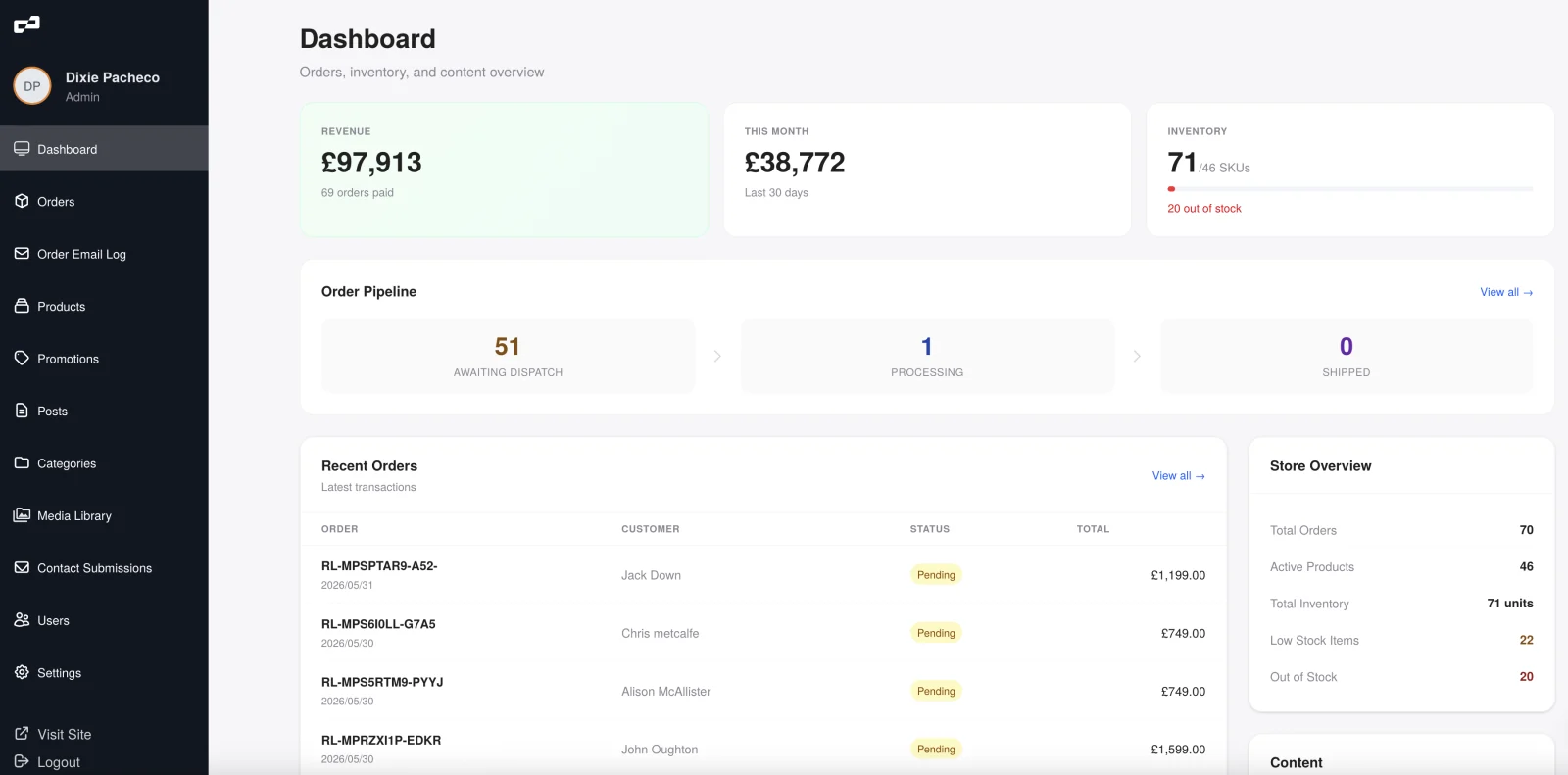
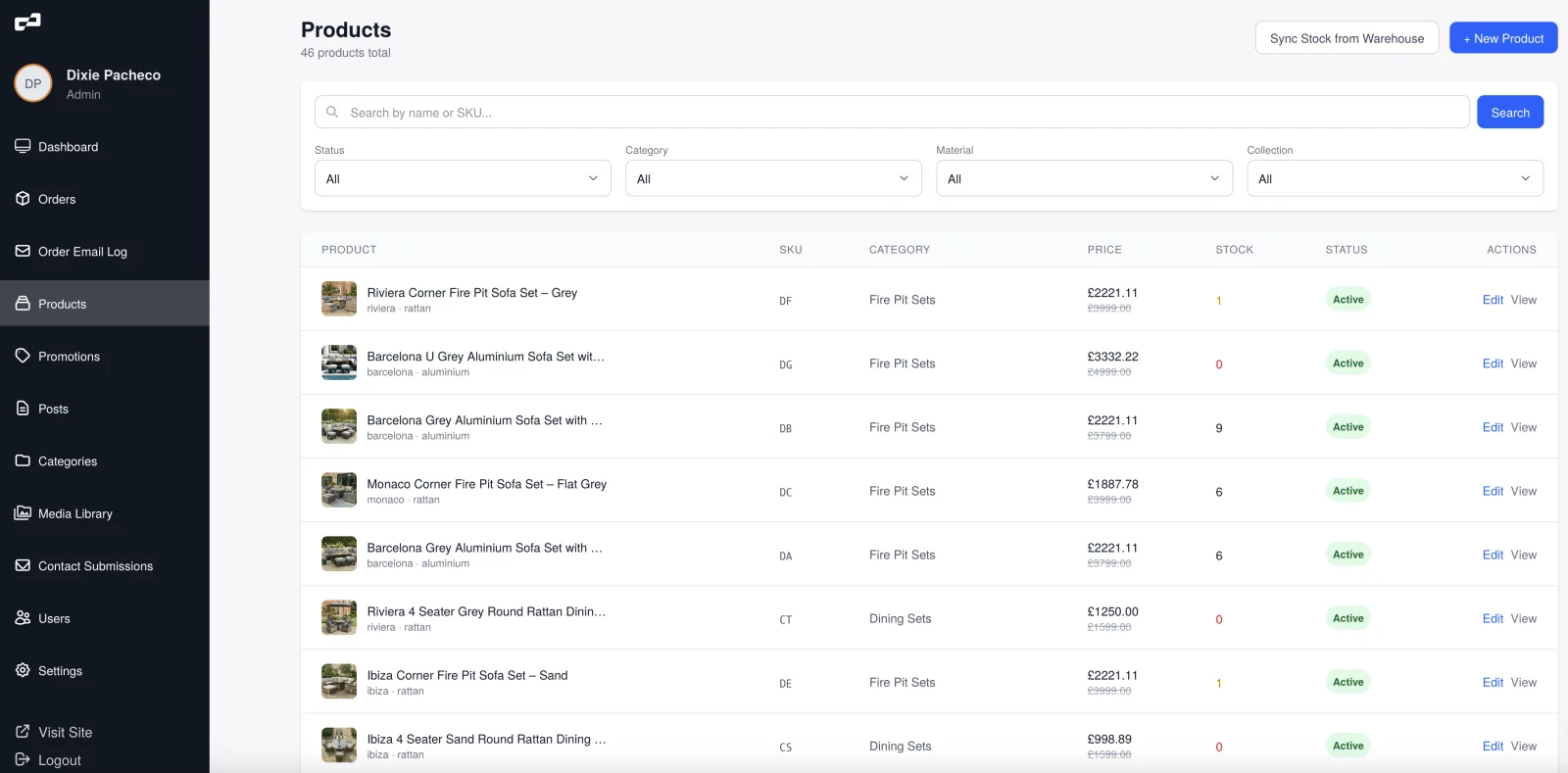
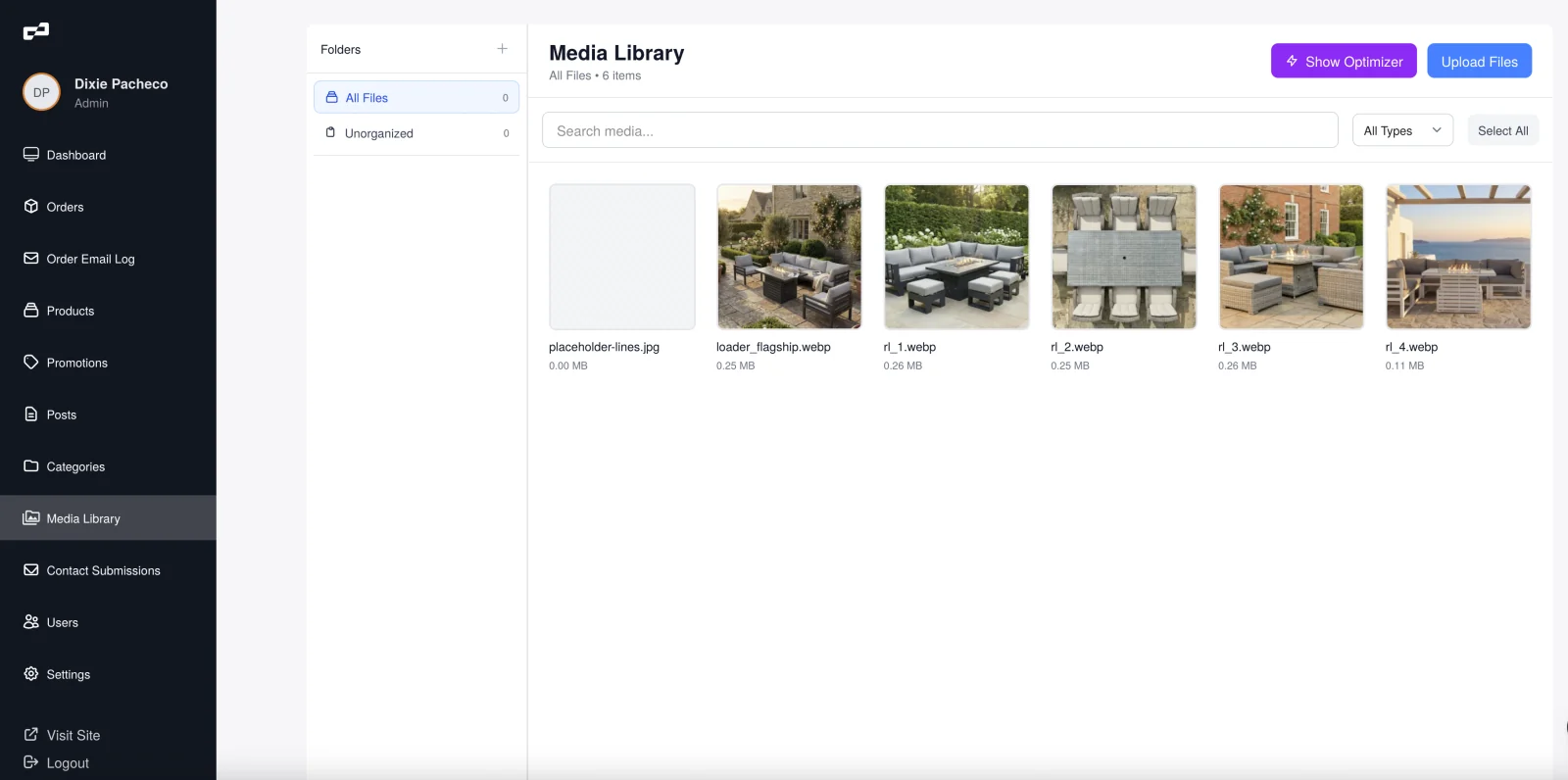
Behind it all runs a custom admin the team owns completely. A dashboard surfaces revenue, the order pipeline, and live inventory. Orders, products, promotions, posts, categories, users, and a media library with built-in image optimization all live in one place. A "Sync Stock from Warehouse" action keeps inventory honest against the ClarusWMS 3PL, and orders push outbound automatically — no spreadsheets, no per-seat fees, no platform lock-in.
The build also wires up the marketing and growth stack the business runs on: Klaviyo for email and newsletter capture, an automatically generated Google Merchant feed to power Shopping campaigns, and Google Ads conversion tracking plus GA4 analytics. Transactional email runs through Resend, errors are caught in production with Sentry, and Redis keeps the storefront fast under load.
Bespoke Editorial Storefront
Custom SvelteKit storefront with full-bleed imagery, restrained typography, and purposeful motion that positions the brand as premium, not templated.
Multi-Payment Checkout
Card, PayPal, Apple Pay, Google Pay, and Klarna in one flow, with Stripe webhooks confirming every order server-side so high-ticket purchases never silently fail.
Predictive Search & Discovery
Instant search across collections and products, with comparison-friendly product pages that surface price, finance, and delivery up front.
Custom CMS & Order Management
A bespoke admin for products, orders, promotions, content, and media — fully owned, no recurring platform or per-seat fees.
Warehouse Stock Sync
Two-way integration with the ClarusWMS 3PL warehouse: orders push out automatically and stock levels sync back, keeping inventory accurate without manual work.
Marketing & Growth Stack
Klaviyo email and newsletter capture, an automated Google Merchant feed for Shopping campaigns, and Google Ads conversion tracking with GA4 analytics — wired in, not bolted on.
Production-Grade Infrastructure
Transactional email via Resend, error monitoring with Sentry, and Redis caching keep the store reliable and fast as traffic scales.
The Build
A look at the shipped storefront and the custom back office — designed in Figma, built end-to-end on SvelteKit.
The Result
Rattan Luxe now runs on a storefront it owns outright — fast, SEO-ready, and free of recurring platform and per-seat fees. The buying journey is built for the way high-ticket customers actually decide: research-friendly product pages, a trust bar that answers objections before they're raised, and a checkout that accepts every way a buyer wants to pay.
The back office turned a multi-tool, spreadsheet-driven operation into a single dashboard. The team manages products, orders, promotions, content, and media in one place, with revenue and the order pipeline visible at a glance and warehouse stock kept in sync automatically.
Most importantly, the brand's premium positioning now extends all the way through the experience — from the first full-bleed hero to the order confirmation — instead of stopping at a template's limits.
7
Payment methods
Card, PayPal, Apple/Google Pay, Klarna
£0
Per-seat platform fees
Fully owned CMS & checkout
100%
Custom full-stack build
SvelteKit, no Shopify theme
Live
Warehouse stock sync
Automatic two-way 3PL integration
Reflection
This project was a reminder that high-ticket e-commerce is a trust-engineering problem before it's a design problem. The work that moved the needle wasn't a prettier hero — it was reverse-engineering the exact moment a buyer hesitates over a £2,000 purchase and removing the doubt at that step: a clear delivery promise, a warranty in plain sight, a finance option, a payment method they already trust.
Owning the full stack is what made that possible. When checkout, CMS, and data all live in code you control, you can shape the buying journey around the customer instead of around a platform's defaults. There's no plugin standing between the business and the experience it wants to deliver.
Building on SvelteKit kept the whole thing fast and maintainable as it grew. A high-ticket store can't afford the slow, fragile sprawl that plugin-stacked platforms accumulate. Custom code, a clean data layer, and a back office the client actually owns — that's the difference between renting a store and owning a business.